TPS54560 Low Ripple DC-DC High Voltage 60V to 5V Buck Switch Power Supply Module 5A Step-down Power Module
Dostupnost vyzvednutí nebylo možné načíst

Introduction:
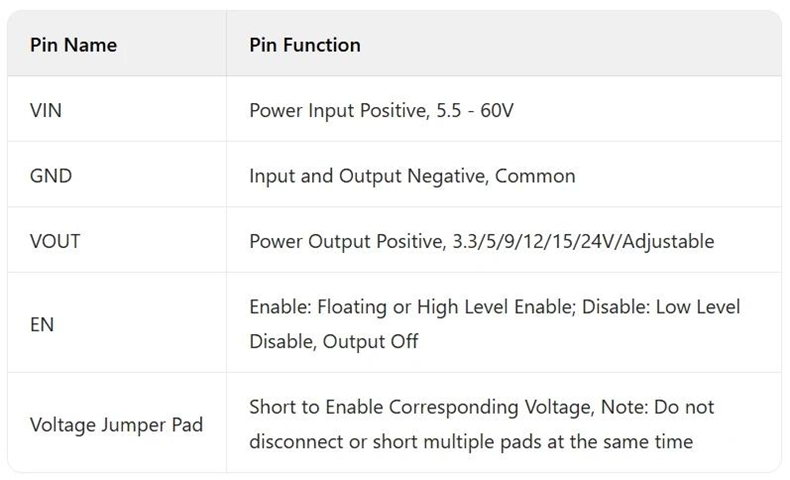
- This module adopts for TI buck dedicated chip TPS54560 buck voltage scheme, with low output ripple and stable performance. The module is a typical BUCK step-down structure, with an input voltage range of 5.5-60V and an output current of up to 5A. It offers multiple output versions including 3.3V, 5V, 9V, 12V, 15V, and 24V. The board is equipped with a red LED output indicator light, and the module is reserved with an enable interface for users.
Specifications:
- Module type: buck switch power supply
- Input voltage: DC 5.5 - 60V
- Output voltage: DC 5V
- Output current: 5A (max)
- Input output voltage difference: > 2V
- Static current: 1mA
- Output ripple: better than 25mV (Vin = 12V, Vout = 5V 5A; the larger the input power, the greater the ripple)
- Switch frequency: 600kHz
- Module heating: input voltage, the larger the load, the lower the efficiency and the greater the heat generation.
- Working temperature: -25℃ to 125℃
- Protection measurement: without protection
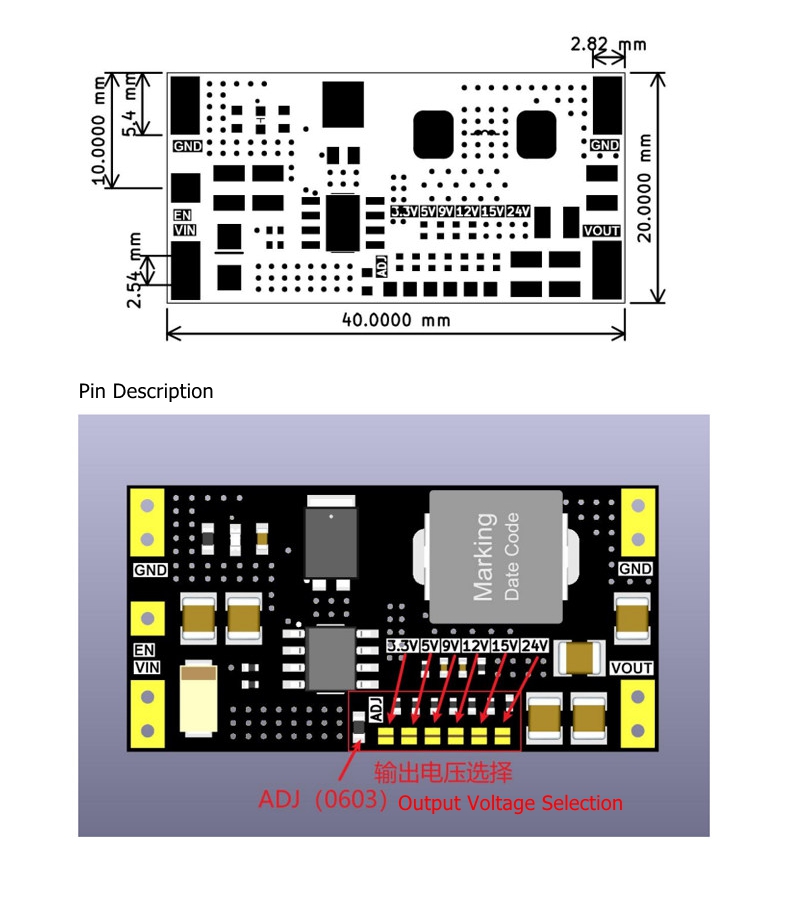
- Output adjustment: jumper pad selection, DC5V
- Module interface: large area pad (it can also connect 2.54mm pin)
- Module size: 40 x 20 x 5.5mm
Package Included:
- 1 x Buck Power Supply Module
FAQ:
Q: How to choose different output voltages?
A: If the output voltage you need is not within the range of the six jumper pads, you can disconnect all six jumper pads and solder a 0603 resistor at the ADJ position. The corresponding output voltage calculation formula is as follows:

Q: Why can't the nominal ripple parameter be tested?
A: It is recommended to use an oscilloscope ground spring to measure the ripple to avoid excessive test deviation. Due to individual differences, there will be deviations in the above test parameters but not too large. Secondly, the voltage difference between input and output and the magnitude of the load current also have a certain impact on the output ripple.
Q: Why does the module supply 6V, the output voltage is selected as 5V, but the output is only 4V?
A: The module is a step-down type. It is recommended that the input voltage needs to be at least 2V higher than the output voltage for stable output.
Q: Why can't the module reach the max output nominal value during use?
A: Energy conservation. The input power of the module must be greater than the output power.
Q: Why does the module heat seriously?
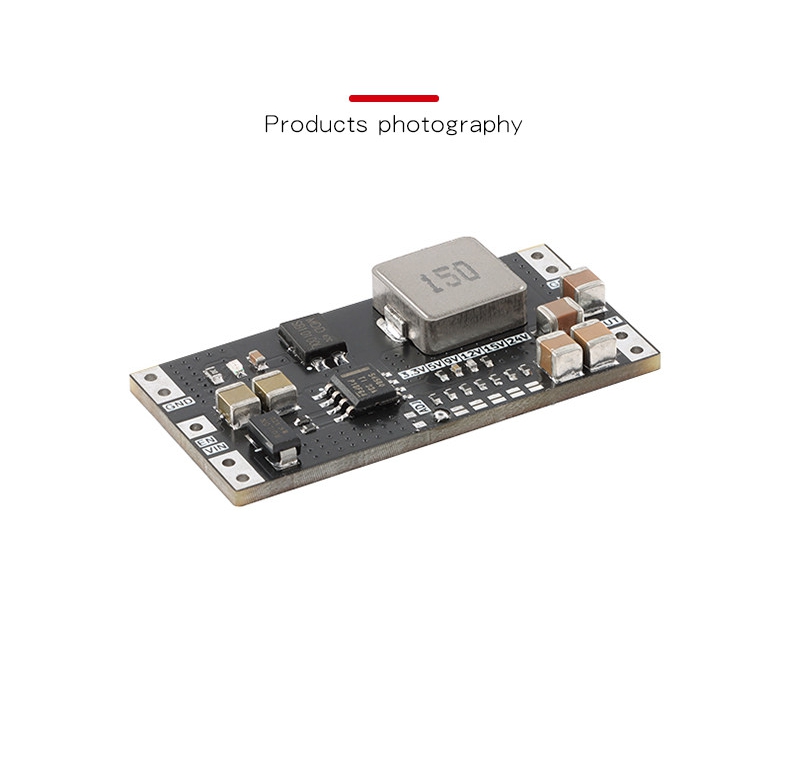
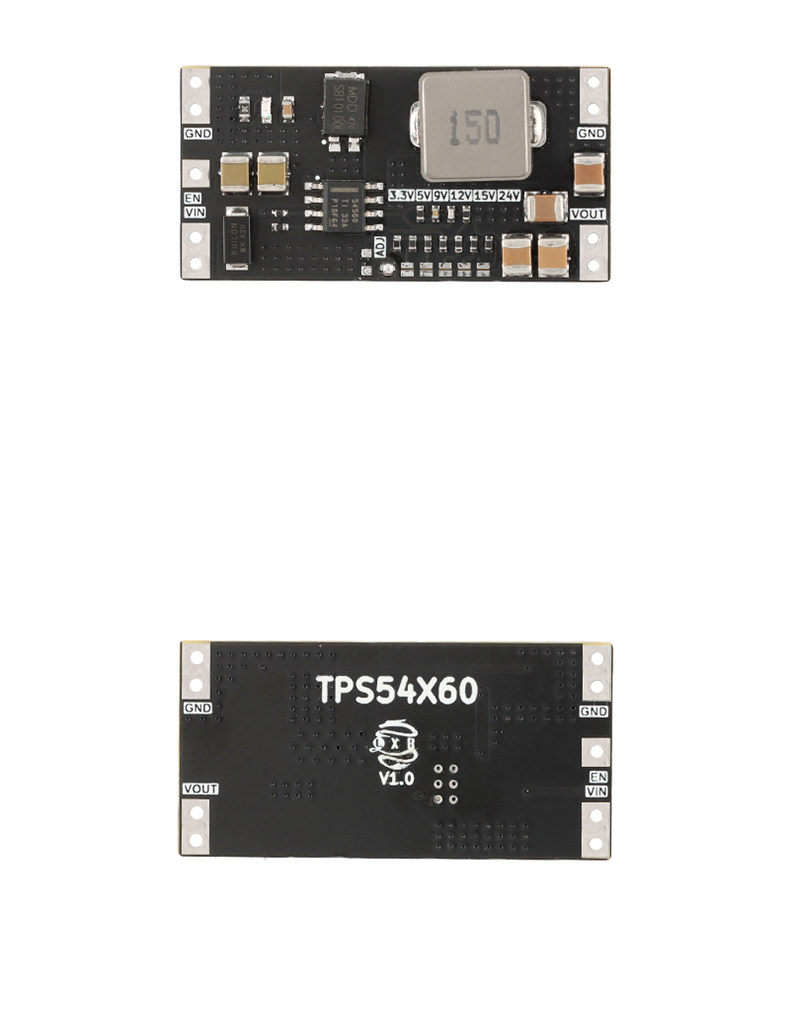
A: The heating of the module is mainly determined by the voltage difference between input and output and the magnitude of the load current. Due to the limited volume of the module, it cannot dissipate heat well. When using high power (3A and above [for reference only, actually based on the module's operating temperature, add heat dissipation if exceeding the operating temperature]), please the buyer add heat sinks, fans and other heat dissipation measures for the module. The heat is mainly concentrated on the chip and the Schottky diode. If heat dissipation is needed, please prioritize heat dissipation for the chip and the Schottky diode. (Schottky diode; the three-pin diode above the chip)
- Note: Due to the influence of the voltage difference between input and output and the magnitude of the output voltage, in the case of high input voltage and output voltage, heat dissipation may be required at 2A or even lower.
Precautions:
1. Do not touch the module components with hands or other substances with small resistance values. Contact will make the module work abnormally and the output voltage will fluctuate greatly.
2. When measuring voltage under a large load current, please use shorter/thicker wires for connection (wire resistance will affect the measured voltage), or measure directly at the terminal, otherwise the voltage measurement will be inaccurate.
3. To avoid the customer's hand touching the module circuit and causing the chip to burn out due to static electricity, etc., please try to avoid touching the resistor and capacitor components near the chip by hand when the module is powered on.
4. The module cannot reach the above test values in a high-temperature environment. The higher the temperature, the weaker the output capability.