

Di Thanksbuyer
Smartxbw Bus Adapter A103 USB SPI I2C QSPI DSPI Debugger EEPROM Flash Programmer Signal Generator
Prezzo di listino
$102.61
Prezzo di listino
Prezzo scontato
$102.61
Prezzo unitario
per
Imposte incluse.
Spese di spedizione calcolate al check-out.
Impossibile caricare la disponibilità di ritiro
Availability:
2000 disponibile/i
SKU:
106515
Tags:
Collections:

Prezzo di listino
$102.61
Prezzo di listino
Prezzo scontato
$102.61
Product Features:
* Adjustable I/O Voltage: Freely adjustable from 1.7V to 3.3V.
* Power Outputs: 1-channel I/O power output (80mA) and 1-channel 5V power output (350mA).
* USB Interface: High-Speed USB 2.0 interface with a data transfer rate of up to 480Mbps, providing high-speed data communication.
* I2C: Adjustable clock frequency from 100kHz to 3.4MHz. SCL/SDA pull-up resistance is adjustable across 12 levels, ranging from 690Ω to 12kΩ. Pull-up resistors can also be disabled.
* SPI: Adjustable clock frequency from 156.25kHz to 40MHz, with 4 selectable timing modes.
* QSPI: Adjustable clock frequency from 156.25kHz to 40MHz, with 4 selectable timing modes. (Note: QSPI uses 4 I/O data lines and is primarily used for SPI Flash communication.)
* DSPI: Adjustable clock frequency from 156.25kHz to 40MHz, with 4 selectable timing modes. (Note: DSPI uses 2 data I/O lines and is primarily designed for SPI Flash.)
* Programmable Frequency Generator: Freely adjustable frequency from 2.5kHz to 100MHz, with a 1Hz step resolution. (Note: 1 output channel is enabled by default. Contact the seller to activate the second channel free of charge.)
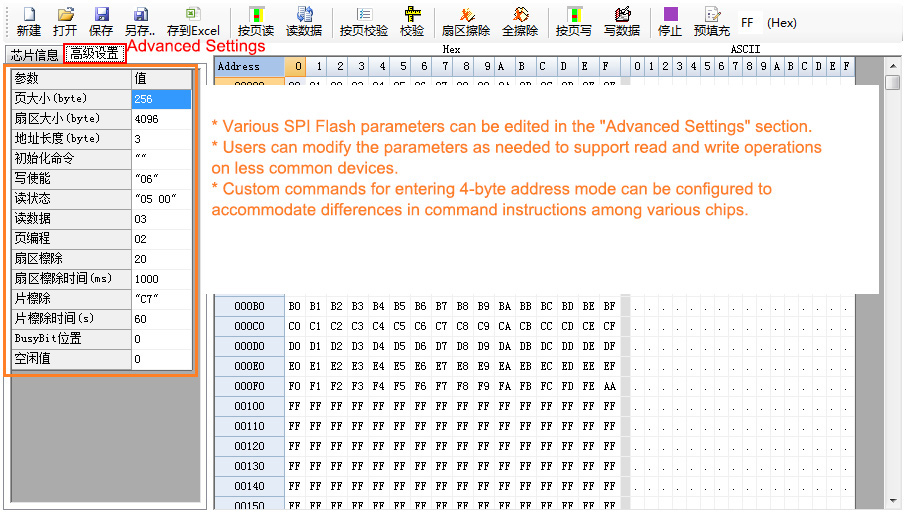
* SPI Flash Utility: Dedicated tool for reading, writing, and verifying SPI Flash devices. It supports convenient operations on various SPI Flash chips. Advanced Settings allow users to edit SPI Flash parameters for compatibility with less common devices. Customizable commands for entering 4-byte address mode are also supported to accommodate differences in command sets across different chips.
* FeRAM Utility: Dedicated tool for reading, writing, and verifying FeRAM devices.
* EEPROM Utility: Dedicated tool for reading, writing, and verifying EEPROM devices.
* GPIO: 1-channel GPIO interface available for secondary development.
* SPI Slave Mode: Supports SPI Slave functionality, with A103 operating as the slave device. Since this function is highly application-dependent, secondary development resources and technical documentation are provided, allowing users to customize the functionality according to their requirements.
* Secondary Development Support: Detailed development documentation, technical manuals, and example source code are provided.
* Integrated Software: All functions are integrated into a single software application for convenient operation. The host software is available in both English and Chinese. Timing configurations provide a WYSIWYG (What You See Is What You Get) interface for intuitive setup and adjustment.
* Free Future Updates: Additional commonly used functions will be added in future updates, which will be provided free of charge.
Secondary Development Support:
* C# and C++ Examples: Source code for secondary development example programs in C# and C++ is provided.
* SPI Slave Mode: Supports SPI Slave functionality, with the A103 operating as the slave device.
* Detailed API Documentation: Comprehensive API documentation is provided.
* DLL Support: A DLL is provided for software development in various programming language environments.
* Continuous Source Code Updates: Source code will be continuously updated and expanded with additional features and examples.
Typical Applications:
* Adjustable I/O Voltage: Supports the voltage requirements of a wide range of commonly used electronic components.
* I2C Device Communication and Debugging: Read, write, and debug I2C interface devices, such as EEPROMs and sensors.
* SPI Device Communication and Debugging: Read, write, and debug SPI interface devices, such as MPU6500, sensors, and SPI Flash.
* QSPI and DSPI Applications: Supports communication with 25-series SPI Flash and SPI NAND Flash devices.
* Programmable Clock Frequency: Ideal for debugging applications involving clock signals, with fine frequency adjustment in 1Hz increments.
Software Features and Functions:
1. Real-Time Timing Waveform Display
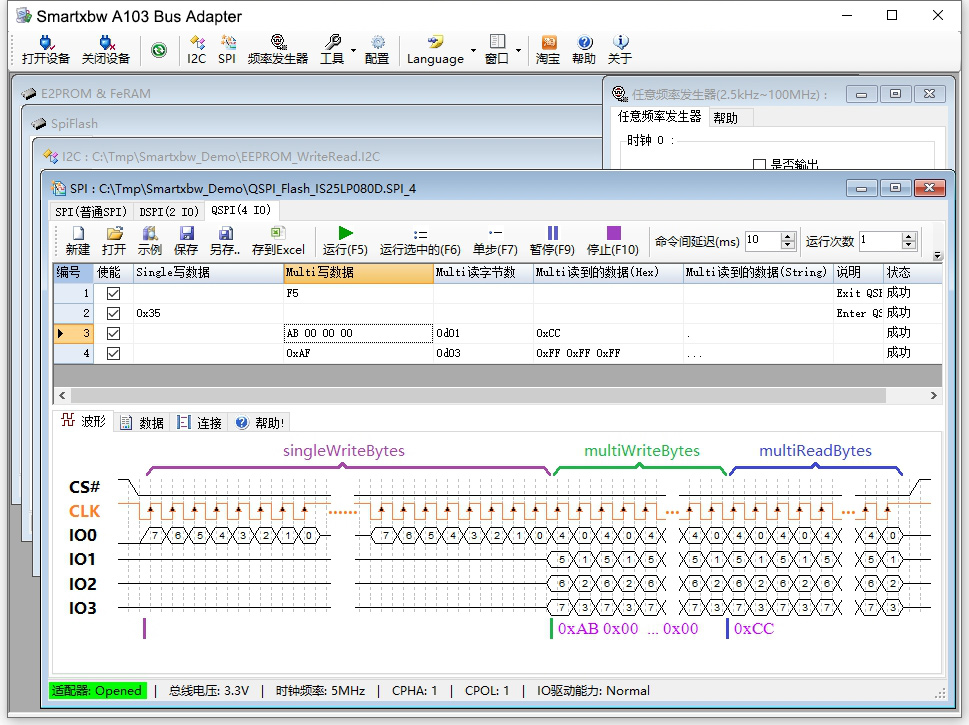
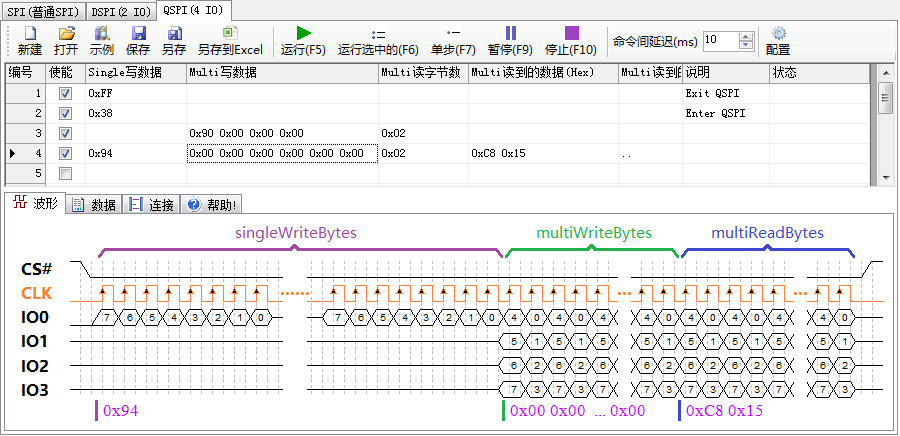
* The software directly displays user-entered I2C, SPI, QSPI, and DSPI commands as actual timing waveforms. This WYSIWYG (What You See Is What You Get) display makes debugging significantly easier and more intuitive.
2. Configuration Settings
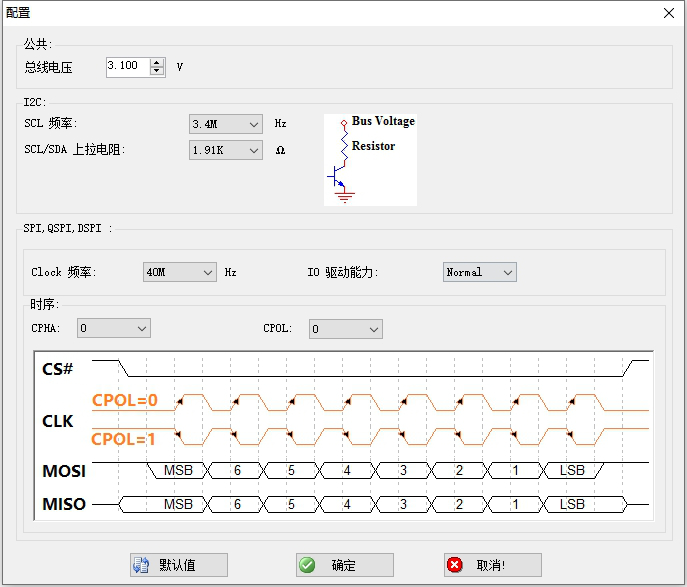
* Users can easily and intuitively view and modify various device parameters and configuration settings, as shown in the following figure.
3. I2C Function
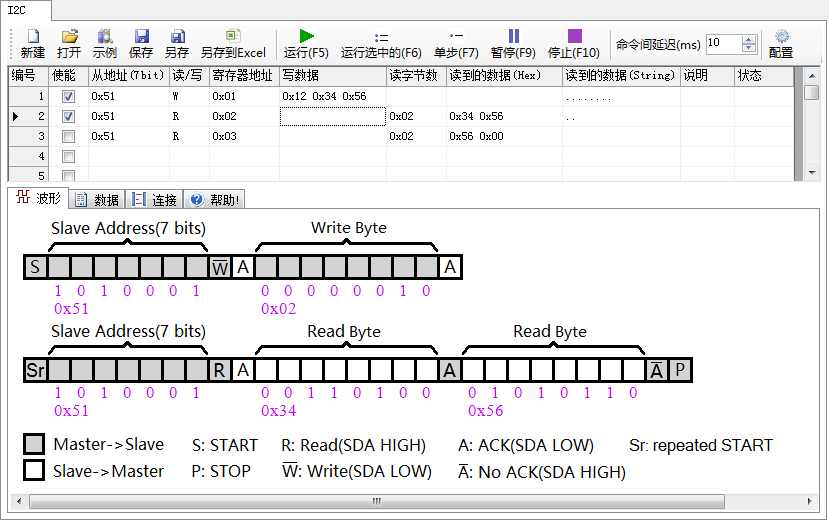
* Supports read and write operations for I2C devices, such as I2C EEPROMs, I/O expansion chips, and sensor chips. As shown in the figure below, user-entered commands are directly displayed as actual timing waveforms, making operation and debugging intuitive and convenient.
4. SPI Function
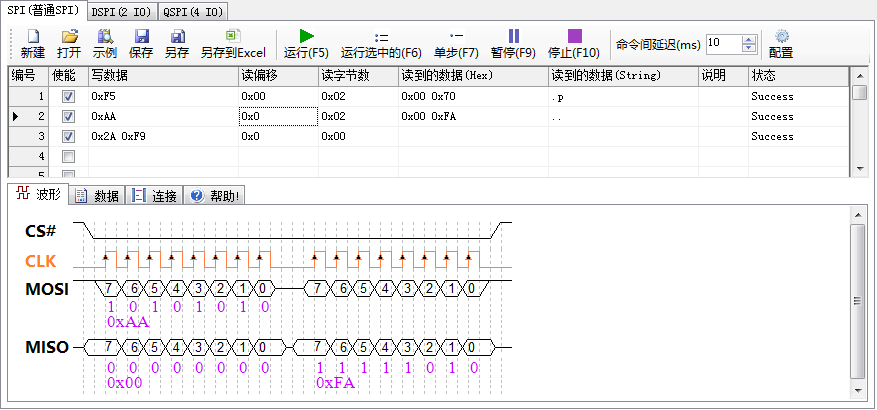
* Supports read and write operations for SPI devices, such as the MPU6500 IMU sensor and SPI Flash. As shown in the figure below, user-entered commands are directly displayed as actual timing waveforms, allowing users to compare them with the timing requirements specified in the chip datasheets, making debugging straightforward and convenient.
5. QSPI and DSPI Functions
* QSPI: A 4-I/O SPI interface primarily used for SPI Flash devices, such as W25Q32JW and GD25LQ32D. User-entered commands are displayed as actual timing waveforms, allowing direct comparison with chip datasheet timing requirements for convenient debugging.
* DSPI: A 2-I/O SPI interface primarily used for SPI Flash devices. Its software operation and functionality are similar to those of QSPI.
6. Programmable Frequency Generator
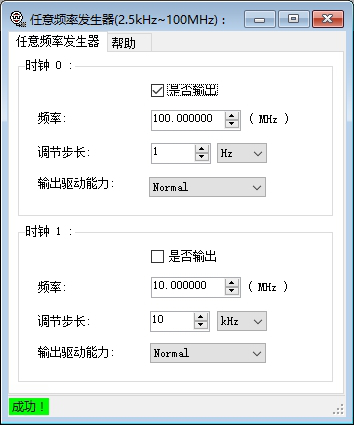
* Conveniently generates signals at any selected frequency from 2.5kHz to 100MHz, with a frequency adjustment resolution of 1Hz.
7. 25-Series SPI Flash Functions
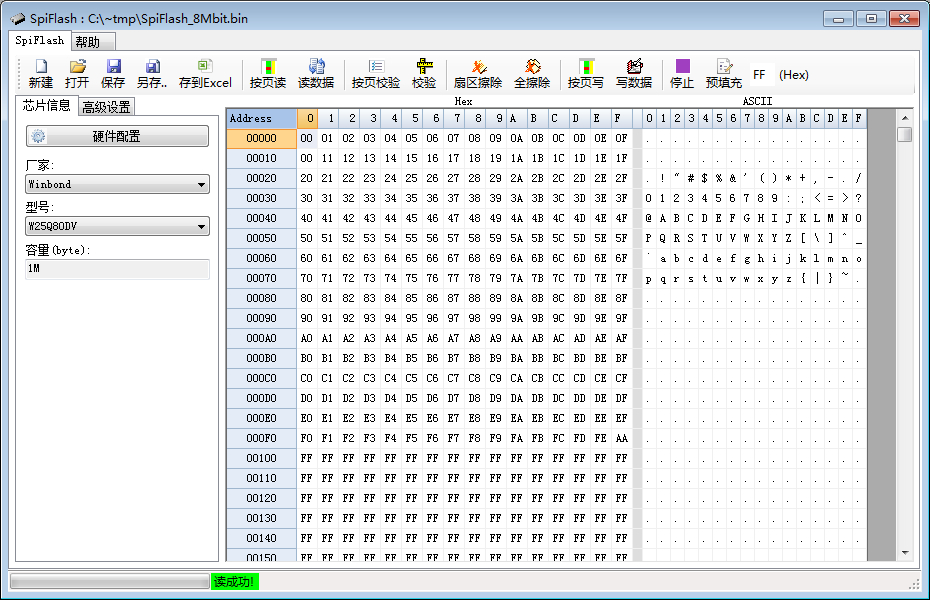
* Supports convenient read, write, and verification operations for various 25-series SPI Flash devices.
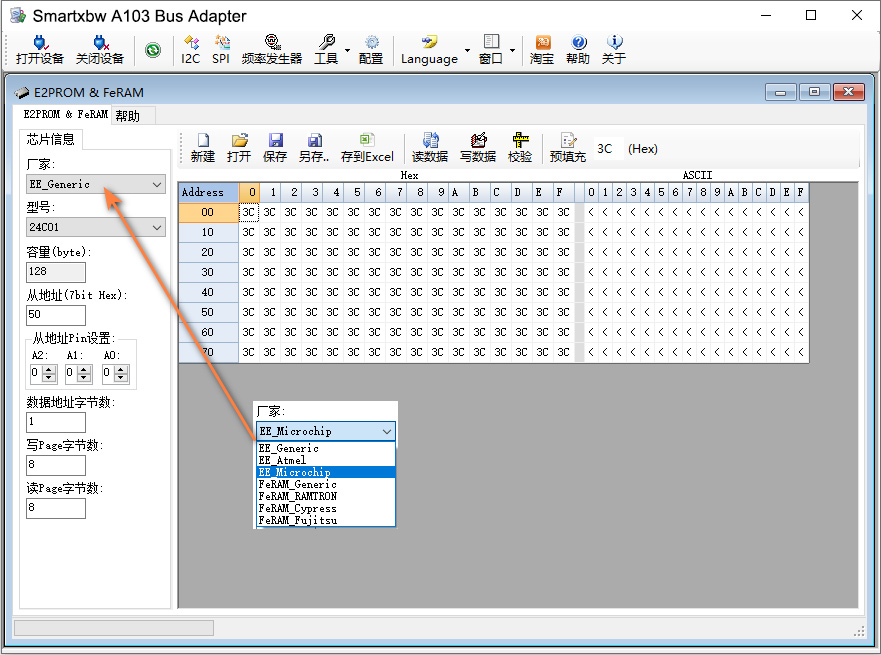
8. EEPROM and FeRAM Functions
* Supports read, write, and verification operations for various EEPROM and FeRAM devices. Flexible parameter configuration allows easy adaptation to different device specifications, including less common devices, for reliable read and write operations.
9. Secondary Development Support
* Supports secondary development through a DLL, C# and C++ example source code, and detailed API documentation. Lifetime technical support is provided.
10. SPI Slave and GPIO2 Functions
* SPI Slave mode and GPIO2 functionality are available through secondary development.
Package Contents:
* A103 Bus Adapter x 1
* High-Speed USB Cable x 1
* Gold-Plated Dupont Wires x 8
Packaging Details:
* Package weight: 0.4kg
FAQ:
Q: Will new features be added in the future? How can I upgrade the software?
A: Yes. Software updates are provided free of charge. Simply download the latest software version to access the new features.
Q: Does I2C support 10-bit addressing?
A: Yes. Simply enter the two parts of the 10-bit address into the corresponding fields highlighted in orange in the figure below.

Q: How is 3.4MHz I2C implemented, and how do I use it?
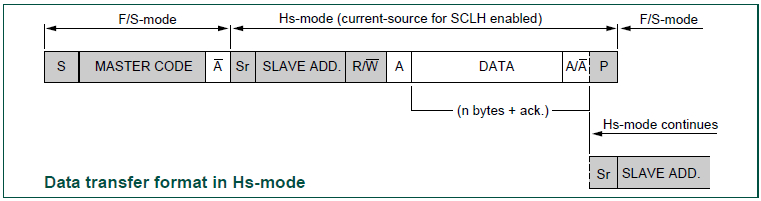
A: The 3.4MHz I2C function fully complies with the I2C High-Speed Mode specification. The required Master Code is automatically inserted before each command in accordance with the specification, so no additional user configuration is required. Due to the high bus speed, strong pull-up resistors are recommended to ensure signal integrity. For example, you can configure the I2C pull-up resistance to 690Ω in the software or add external pull-up resistors to your own board.
Q: What is the VIO power supply, and how can I use and adjust it?
A: VIO is the internal I/O power supply of the A103. Its voltage can be freely adjusted from 1.7V to 3.3V, allowing compatibility with devices and chips operating at different voltage levels. The configured VIO voltage is stored in the A103 device and automatically restored to the previously set value the next time the device is powered on.
Q: What is the output current of the VIO power supply, and how can it be used?
A: The VIO power supply provides an output current of up to 80mA. When needed, it can directly power external chips or circuit boards, making debugging and testing more convenient.
Q: Which programming languages are supported for secondary development?
A: C# and Visual C++ example source code are provided by default, along with a DLL (Dynamic-Link Library) and detailed secondary development documentation. Users can also choose other programming languages according to their requirements.
Q: How is SPI Slave mode implemented?
A: Since SPI Slave functionality is highly dependent on specific application requirements, example source code and development documentation are provided to allow users to implement and customize the functionality according to their needs.